
Conversion & Heavy Refurbishment Finance
Conversion finance can support property projects where an existing building is being materially changed through structural works, major reconfiguration or change of use.
The lender is not simply funding improvements. It is underwriting the transformation of the asset.
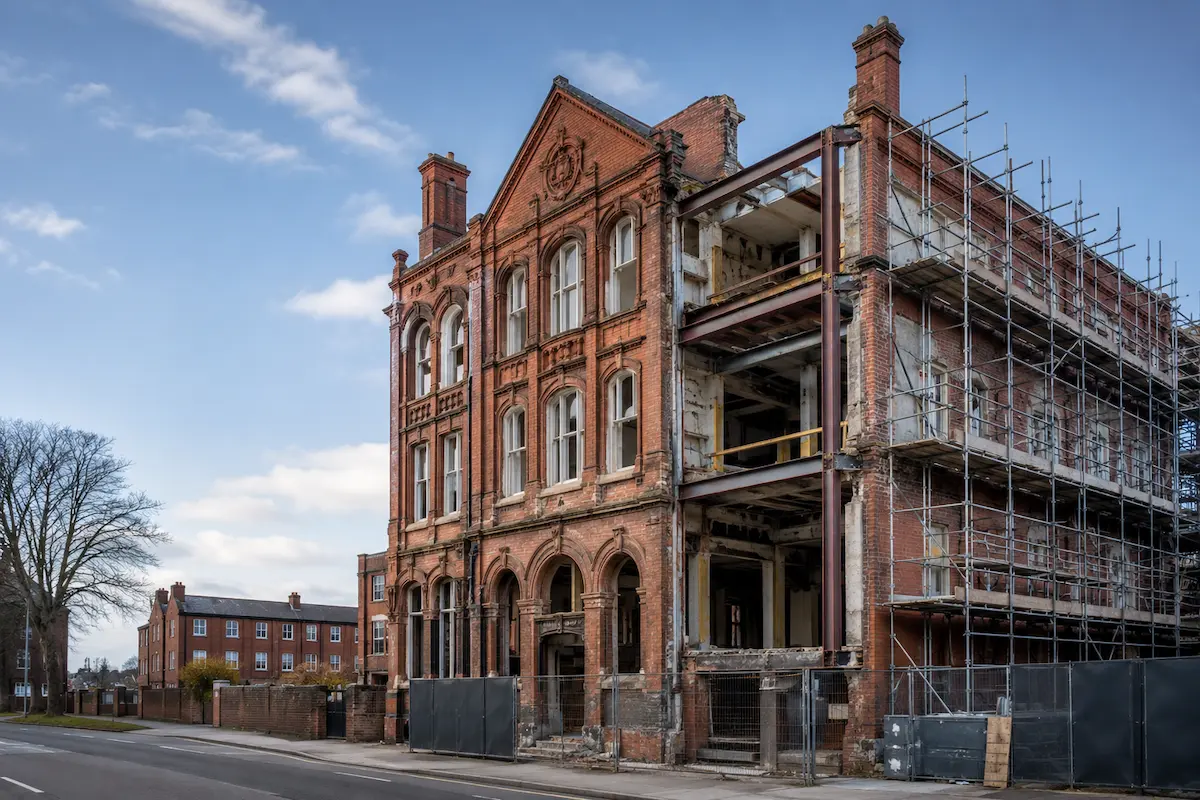
Conversion finance sits between refurbishment and ground-up development.
Some property projects begin with an existing building but involve works extensive enough that a standard refurbishment facility may no longer fit.
The scheme might involve stripping a building back to its structure, changing its use, creating several residential units, rebuilding substantial elements, adding floors or undertaking significant structural alteration.
At that point the lender is increasingly concerned with development risk: planning, technical delivery, construction cost, cost to complete, contractor capability, programme, completed value and exit.
The question is not whether the building already exists. It is how different the asset will be when the work is finished.
Conversion finance can support substantial changes to existing property.
The appropriate structure depends on the nature of the existing asset, the extent of the works and the value and use expected at completion.
Commercial to residential
Converting suitable offices, shops or other commercial premises into residential units.
Large residential conversions
Reconfiguring substantial houses or other residential property into flats or multiple units.
Heavy refurbishment
Projects involving structural works, major internal reconstruction or extensive replacement of building elements.
Mixed-use conversion
Restructuring property into a combination of commercial and residential accommodation.
Extensions & additional floors
Schemes where significant new construction is added to an existing building.
Part-completed projects
Acquisition or refinance of a conversion already underway, subject to a reliable cost-to-complete position.
When does refurbishment become development?
There is no single universal boundary. Different lenders classify projects differently. The practical distinction usually depends on the scale and complexity of the works.
Cosmetic improvement, replacement kitchens, decoration and limited upgrading may fit conventional refurbishment finance.
Structural alteration, major change of use, extensive reconstruction or a scheme where significant value is created through construction tends to require a more development-led assessment.
| Light refurbishment | Primarily cosmetic or non-structural improvement to an existing property. |
|---|---|
| Heavy refurbishment | Significant works that may include structural alteration or major internal reconstruction. |
| Conversion | Material change to the configuration or use of an existing building. |
| Ground-up development | Construction of a substantially new building or scheme from the site upwards. |
What lenders assess on a conversion or heavy refurbishment.
The lender needs to understand both the building that exists today and the asset expected at completion.
Existing property
Current value, condition, tenure, use and whether the lender has suitable security from day one.
Planning & use
Whether the proposed conversion has the necessary planning position and permissions for the intended outcome.
Scope of works
Exactly what is being retained, removed, altered or added and how complex the construction is.
Cost plan
Build costs, professional fees, contingency and whether sufficient money remains available to finish the scheme.
Developer
Relevant experience and the ability to manage structural works, consultants and unexpected issues.
Contractor
Capability, financial standing and experience with comparable conversion or heavy refurbishment work.
Completed value
Evidence supporting the GDV or investment value of the transformed property.
Exit
A credible sales or refinance route appropriate to the completed property and intended use.
A conversion can involve more than one approval process.
A change to an existing building may require planning permission, building regulations approval or other consents depending on the property and the work proposed.
GOV.UK confirms that building regulations approval is different from planning permission and that both may be required.
For a lender, the issue is practical: are the approvals sufficiently advanced for the scheme to start and proceed on the proposed timetable?
| Planning position | Does the intended use and physical alteration have the necessary planning basis? |
|---|---|
| Building regulations | Is the technical approval route appropriate to the proposed construction? |
| Structural design | Have important alterations and load-bearing changes been properly designed? |
| Existing condition | Are surveys sufficient to identify material defects or hidden construction risk? |
| Other consents | Could listed status, leasehold restrictions or other property-specific matters affect delivery? |
Existing buildings can hide costs that were not obvious at acquisition.
Conversion projects carry a different type of construction uncertainty from clean-site development. Opening up an existing building can reveal structural defects, obsolete services, damp, asbestos, drainage problems or other issues that were not fully visible beforehand.
That makes the quality of the survey work, specification and contingency particularly important.
A lender needs confidence that sufficient funds remain available to complete the conversion even if the building presents some unwelcome surprises.
Survey first
Understand the condition of the existing structure before relying on a construction budget.
Detailed specification
The cost plan should reflect what is actually being retained, removed, repaired and rebuilt.
Real contingency
Contingency should recognise the additional uncertainty that comes with working inside an existing building.
What we need to understand the project.
The first task is to establish the starting asset, the proposed transformation and how the numbers connect.
- Property address and current use
- Purchase price or current value
- Planning and intended use
- Schedule and scope of works
- Construction budget
- Professional fees and contingency
- Expected GDV or investment value
- Developer equity
- Developer and contractor experience
- Programme and exit strategy
The main risks are usually visible before the lender is approached.
Hidden defects
Opening up an existing building reveals work that was not allowed for in the original budget.
Cost overrun
Structural or specification changes increase the remaining cost to complete.
Approval delay
Planning or technical matters prevent the project moving at the expected pace.
Value shortfall
The completed property does not achieve the value assumed in the original appraisal.
Exit mismatch
The completed use, rent or value does not fit the intended sales or refinance strategy.
The completed building needs an exit that matches its new use.
A conversion may finish as residential units for sale, an investment property for retention, a mixed-use asset or another income-producing property.
The proposed exit should therefore be tested against the completed value, marketability, expected rent where relevant, and the requirements of any longer-term refinance lender.
Where the works are complete but sales or refinance require more time, an appropriate development exit or bridging facility may potentially replace the construction finance.
Understand the building. Test the transformation. Prepare the credit case. Then select the lender.
The structure should follow the actual risk of the project rather than forcing a substantial conversion into a product designed for much lighter works.
Understand
Establish the existing asset, planning, proposed use, works, developer, contractor and exit.
Test
Assess build cost, contingency, cost to complete, GDV, equity, programme and exit assumptions.
Prepare
Build a lender-ready credit case that explains the property before and after conversion.
Present
Approach lenders whose appetite and facility structure fit the scale and complexity of the works.
Frequently asked questions
What is conversion finance?
Conversion finance is specialist property funding for projects where an existing building is being materially changed, often through structural works, major reconfiguration or change of use.
What is heavy refurbishment finance?
Heavy refurbishment finance is used where the works are more substantial than ordinary cosmetic improvement and may include structural alteration, major reconstruction or extensive replacement of building elements.
Can conversion finance fund a commercial-to-residential project?
Potentially, subject to planning, the proposed works, borrower experience, costs, valuation, equity and the lender’s appetite for the completed scheme.
How are conversion works funded?
Depending on the facility, an initial advance may be followed by staged construction drawdowns as the works progress and the lender’s monitoring requirements are satisfied.
Do I need planning permission for a conversion?
It depends on the property, existing use and proposed works. Planning permission, building regulations approval or other consents may be required, so the approval position should be established before relying on a finance programme.
How is conversion finance repaid?
Repayment commonly comes from sale of the completed property, longer-term investment refinance, or an appropriate exit facility after the construction stage has finished.
Discuss a conversion or heavy refurbishment project.
Send us the existing property, planning position, proposed works, construction budget, expected completed value, equity contribution, programme and intended exit.
We will assess the transaction from the lender’s perspective before deciding which structures and lenders appear appropriate.
This page provides general information about commercial property development finance and does not constitute personal financial advice. EAS Finance is a trading name of Elite Admin Services Ltd (FRN 1044838), an appointed representative of White Rose Finance Group Ltd (FRN 630772), authorised and regulated by the Financial Conduct Authority. EAS Finance is a credit broker, not a lender. Lending terms and criteria vary by transaction and lender.